How to Run the Marshmallow Challenge for Team Building
⏱️ ~15 min read · Updated July 1, 2026
Build shaky towers, test teamwork, and watch egos crumble — see how to play Marshmallow Challenge and why chaos makes teams click fast. You want a game that sparks chaos and clarity; how to play Marshmallow Challenge exposes teamwork cracks fast. Harvard Business School and IDEO research indicate prototyping games improve collaboration quality and communication behaviors across teams. Stick around; you'll see why this scrappy tower game hooks groups and reveals teamwork.
Quick Answers: How to Play Marshmallow Challenge
- Gather all materials and set a visible timer to focus efforts.
- Prototype early using spaghetti bundles to test and refine stability.
- Assign roles — leader, builder, communicator — for efficient teamwork.
- Build a strong base and manage weight distribution to support the marshmallow.
- Debrief post-build: review design choices, teamwork, and lessons learned.
Introduction to the Marshmallow Challenge
Before figuring out how to play Marshmallow Challenge, it helps to know why this activity became such a hit in team building circles. The game looks simple — just spaghetti, tape, string, and a marshmallow — but the pressure flips everything. If you're wondering how to play Marshmallow Challenge in a way that actually works, this breakdown keeps it clear, practical, and real.
Origins and Objective: Building the Tallest Structure
Understanding how to play Marshmallow Challenge starts with its core objective: build the tallest structure that stands on its own and supports a marshmallow on top.
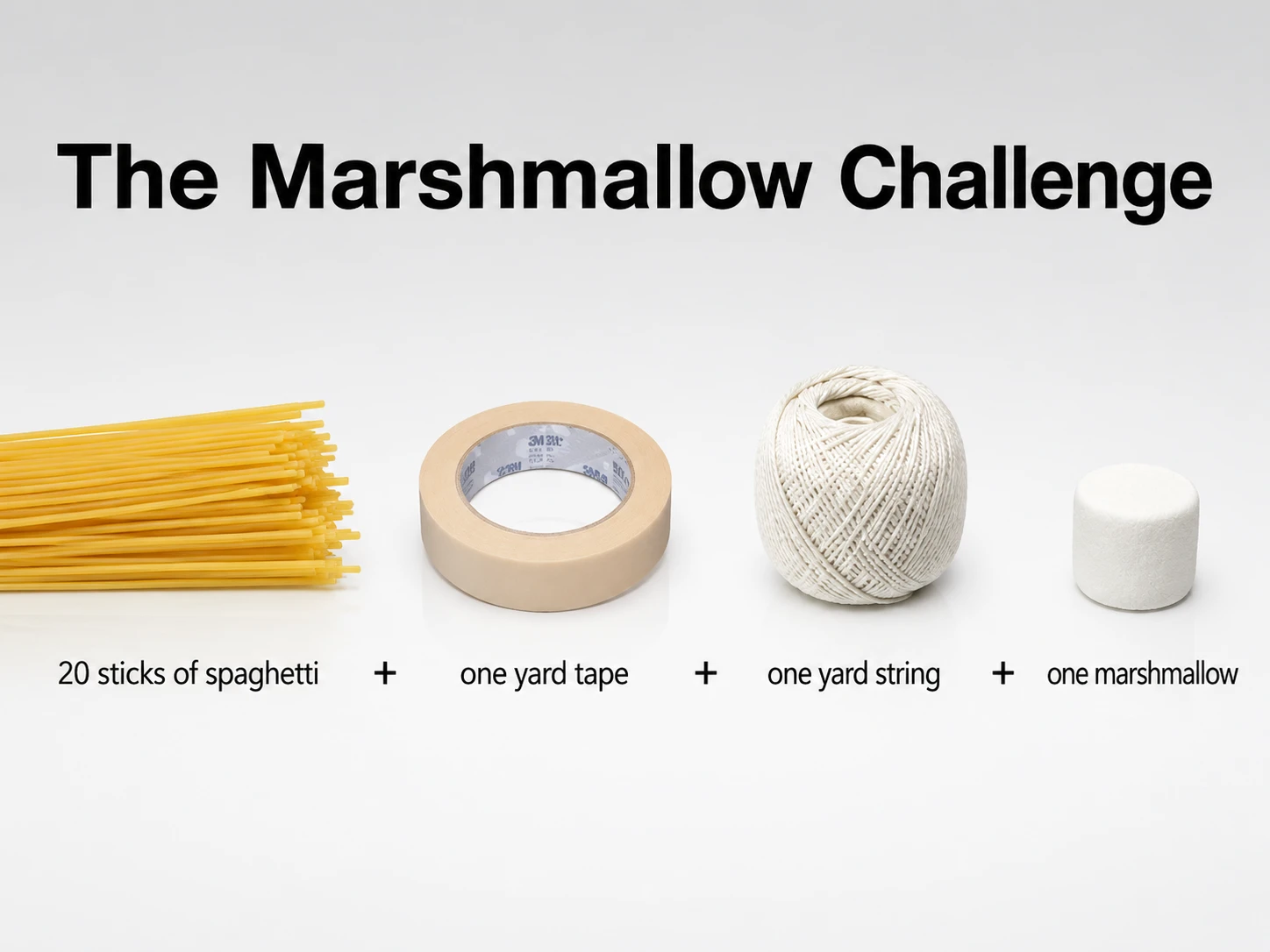
Key materials: 20 sticks of spaghetti, 1 yard of string, 1 yard of tape, 1 marshmallow.
The purpose behind the design: Height matters, but stability wins. The structure must be freestanding — no leaning on chairs or walls. The marshmallow goes on top, not taped to the side.
Why this challenge works in team building: Clear objective: tallest wins. Limited resources force creativity. Time pressure sharpens focus.
What usually surprises teams: The marshmallow weighs more than expected. Thin spaghetti snaps fast under poor planning. Overthinking kills build time.
Many people search for how to play Marshmallow Challenge thinking it's about engineering. It's actually about clarity. The goal sounds easy. Executing it isn't. McKinsey's 2024 workplace collaboration insights note that "small, time-bound experiments reveal more about team effectiveness than extended planning sessions." The Marshmallow Challenge proves that in real time. Start building early.
Trial and Error as a Learning Experience
Prototyping is the secret sauce. Quick truths: Prototyping beats debating. Early failure saves time. Iteration strengthens design.
The experimentation cycle: Build a rough base. Add vertical supports. Test with the marshmallow early. Adjust structure. Repeat within the time limit.
What happens during iteration: Weak joints reveal themselves fast. Problem-solving shifts from theory to action. Teams practice real design thinking under pressure. Mistakes become data. Confidence grows through visible progress. Creativity expands when plans fail. The real lesson? Build, test, tweak. Keep moving.
Team Dynamics and Collaboration Basics
Knowing how to play Marshmallow Challenge isn't just about materials — it's about teamwork. Core behaviors: Clear communication, defined roles, active cooperation.
Role clarity inside the build: One person stabilizes the base. One cuts and distributes tape and string. One monitors height and balance. Informal leadership keeps time.
Communication patterns: Short instructions work best. Quick feedback prevents collapse. Open collaboration sparks smarter designs. Group dynamics in action: Dominant voices can slow progress. Balanced input improves structure. Shared accountability boosts results. Success depends less on materials and more on group dynamics. A steady structure reflects steady cooperation.
Preparing Your Game Setup
Before anyone asks how to play Marshmallow Challenge, the setup decides everything. A messy table or unclear rules can ruin the vibe fast.
Materials Distribution: Spaghetti, Marshmallow, Tape & String
Start with fair materials. Each team receives identical supplies so strategy — not luck — wins.
| Item | Quantity per Team | Purpose |
|---|---|---|
| Spaghetti sticks | 20 | Structural frame |
| Marshmallows | 1 large | Top load requirement |
| Masking tape | 1 yard | Joint stability |
| String | 1 yard | Tension support |
| Scissors | 1 | Cutting control |
Setting up Timer and Workspace
Create a distraction-free clear area. Arrange each table space evenly. Set a visible timer where everyone can see it. Assign each team a numbered designated zone. Announce the time limit — usually 18 minutes, using the Marshmallow Challenge game page timer. Give 5-minute and 1-minute warnings. A tight clock keeps energy high.
Team Roles for Effective Collaboration
Within each team: Team leader keeps focus on the objective. Designer sketches the structure idea. Builder assembles using spaghetti sticks and masking tape. Communicator shares updates. Timekeeper watches the stopwatch. Resource manager tracks string and materials. Role clarity reduces arguing. Quick check-ins every few minutes keep momentum strong. That's a key tip anytime you teach how to play Marshmallow Challenge.
Understanding the Rules and Objectives
Getting clear on how to play Marshmallow Challenge makes the difference between a wobbly mess and a record-breaking tower.
Time Limit Countdown
The time constraint shapes everything. The ticking deadline creates urgency, and that pressure pushes smarter planning. Success logic: Design Phase — Sketch ideas, assign roles, estimate height goals. Build Phase — Assemble base, reinforce joints, monitor balance. Test Phase — Add marshmallow early, adjust structure, re-check stability before the deadline.
Predefined Spaghetti, Tape and Scissors Allowance
| Item | Standard Quantity | Function |
|---|---|---|
| Spaghetti sticks | 20 | Primary structure frame |
| Masking tape | 1 yard | Joint reinforcement |
| String (if given) | 1 yard | Tension support |
| Scissors | 1 | Cutting tape/string |
| Marshmallow | 1 | Top load weight |
McKinsey & Company 2025 noted: "Teams that test assumptions within the first third of a timed challenge outperform those that wait until the end."
Freestanding Structure Requirement
The tower must be a fully self-supporting independent structure. No leaning. No wall help. Build a triangular base. Add vertical columns. Insert diagonal braces. Test sway resistance. Height without design balance collapses fast. Learning how to play Marshmallow Challenge well means respecting gravity, not fighting it.
Marshmallow-at-Top Rule
The marshmallow must sit at the topmost point. No cheating. Height is measured from base to marshmallow peak. Smart teams add the marshmallow early, measure structural bend, and reinforce before final seconds. This rule is the deal-breaker — many towers fall because teams wait too long to test real weight.
Playing the Challenge: Step by Step
Start with a short design phase sketch. Test tape usage before joining large sections. Keep checking structural integrity during every adjustment. Build a compact spaghetti structure. Add support beams slowly. Recheck marshmallow placement after each height increase. Small corrections save towers. Strong team collaboration usually beats one person forcing ideas.
Quick Prototyping with Spaghetti Bundles
Use extra spaghetti sticks for tiny mock towers. Compare different structural concepts quickly. Test the pull of string, tape, and the marshmallow before final assembly. Fast testing helps teams spot weak joins before the timer becomes stressful.
Ensuring Weight Distribution from Base Up
Wide foundation design improves base stability. Even spacing controls weight balance. A shaky center of gravity can wreck an otherwise smart tower. The base matters more than height during the early minutes.
Strategies for Winning the Marshmallow Challenge
Quick wins usually come from teamwork, not luck. A shaky tower falls fast. Smart timing, testing, and clear talk help teams turn spaghetti and tape into something surprisingly tall.
Focus on Base Design for Greater Stability
Build the bottom before chasing height. Use a wide foundation to improve balance. Strengthen weak corners with base reinforcement. Keep load-bearing elements low and evenly spaced. Add cross supports. Teams that rush upward usually wobble out early.
Time Management Hacks to Beat the Clock
Spend two minutes in a quick planning phase. Move into rapid prototyping instead of debating forever. Split duties through smart task delegation. Sketch idea. Build fast. Test stability. Adjust. Finish with strict deadline adherence. A 2025 teamwork report from Deloitte noted that short feedback cycles improve collaborative problem-solving speed in timed exercises.
Embrace Trial and Error to Refine Your Tower
Start with an experimental approach. Create tiny models through testing prototypes. Watch failures carefully instead of restarting blindly. Make structural adjustments after each collapse. Early mistakes reveal hidden weak spots. Learning beats guessing every single time.
Encourage Open Communication Among Participants
Short check-ins keep energy steady. Good idea sharing prevents duplicate work. One teammate watches height. Another tracks tape use. Active listening keeps loud voices from burying smart fixes. Calm constructive feedback builds faster trust and stronger towers.
Debrief: Learning Outcomes and Team Insights
When teams explore how to play Marshmallow Challenge, real insights pop up fast.
Reflecting on Team Cohesion and Problem-Solving
Outcomes often hinge on: Clear communication, shared trust, healthy conflict resolution, quick idea testing, honest feedback, fast pivots. Signs of strong teamwork: open debate, equal voice, calm under pressure. Teams that paused to reset decisions improved stability by small but crucial margins.
Analyzing the Tallest Tower and Creative Solutions
| Team Type | Avg Height (cm) | Prototypes Built | Collapse Rate (%) |
|---|---|---|---|
| Execs | 42 | 2 | 60 |
| Students | 58 | 4 | 35 |
| Mixed | 64 | 5 | 20 |
| Designers | 72 | 6 | 15 |
Success patterns tied to design thinking, prototyping, and smart failure analysis. Test early. Embrace experimentation. Stay wildly resourceful.
Applying Lessons Learned to Real-World Projects
Build small. Test weight early. Reinforce base. Adapt with risk assessment in mind. This builds adaptability and fuels continuous improvement. Run it again. Refine. Scale. That's exactly why the Marshmallow Challenge game page keeps this practical, not just playful.
🔗 Related Marshmallow Challenge & Team Building Resources
Ready to run the Marshmallow Challenge?
Use the full Marshmallow Challenge game page with rules, materials, timer, facilitator script, debrief questions, and variations.
Open the Marshmallow Challenge Game Browse All Games